Longer Articles, Explanations and Discussions
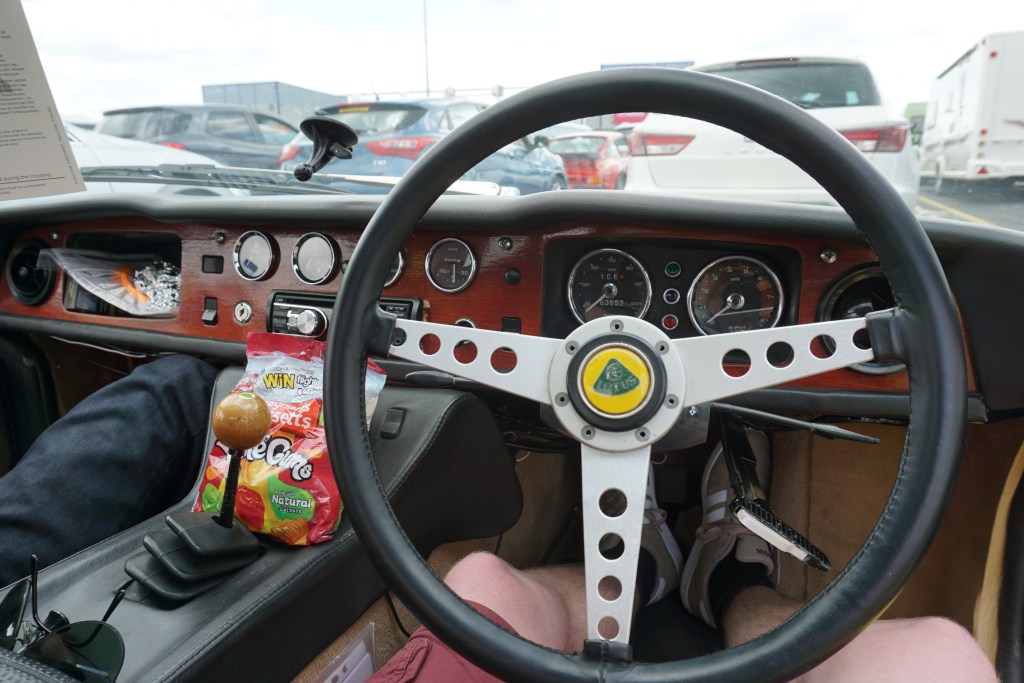
Steering Feel
What is steering feel? Does it actually mean anything and why is it important or even interesting?
When you drive a car there are a myriad of sensations reaching you from the steering wheel. Granular, grainy, telepathic, woolly, dead, inert, corrupted, springy or horror of horrors writhing. Automotive journalism is full of attempts to describe something almost impossibly detailed. Its like trying to describe a piece of music, you would be far better off just listening to it. For what its worth, to me feedback is delicate not harsh. Good steering filters the harshness and only transmits what you need.
Anyway, seeing as you are here and reading, perhaps I should attempt to translate the hows and whys of what makes great steering.
Starting with the simplest, you have unassisted rack and pinion setups. These transfer pretty much everything from the nuance of crossing the road crown down to loading up as the forces increase during cornering. If the car is light enough then the wheel can kick just from crossing cats eyes, this level of feedback is pretty much unique to this style of steering. In a front drive car you can get impressive sensations of torque steer and even more serious kicks through the steering should you drop a road wheel into a pot hole. Try a healthy Peugeot 205gti if you want to experience this for yourself. If you have read anything about Lotus, Caterham, Ariel or any of the other proponents of these systems you will realise they have one thing in common. Light weight. For it to work well, you want a featherweight car driving the rear wheels. In these scenarios, especially coupled with narrow tyres it can be fantastic. Providing a sense of connection which manufacturers have long tried to emulate with their power steering setups.
Steering boxes, welcome to the murky world of land Rovers, lorries and tractors. The main benefits of a steering box are higher mechanical advantage and packaging. A rack and pinion must be mounted at a specific height in relation to the wheels if you want to avoid bumpsteer and other nasties. A box allows you more freedom with where you mount it but there are always more joints between the steering wheel and the road wheels. Joints mean vagueness, coupled with the inherent slop inside the box. If you want to find out what I mean, drive a series Land Rover down a twisty, bumpy road. I guarantee you will be grinning because they make you smile but the steering really is very poor. Its pretty important to have a benchmark if you are trying to define “good feel” and an unassisted steering box is the epitome of “bad feel”.
Hydraulic power steering, Porsche fetishists step this way. Now as a general rule, this is what I seek out in any car over the tonne mark. Done well, it filters out the worst kicks through the wheel but transmits what you actually want. Its capable of going delicately light as the front tyres loose traction, telling you how much grip you really have and if you can push harder or if you’re pushing your luck. It can all but filter out kickback from potholes and allows for faster steering without compromise on weight. Porsche historically have been particularly good at this but Jaguar have produced some great setups as have the French and Japanese manufacturers. If you want to know what great steering is then drive a good 996 Porsche. If you can’t find one then even something as perceivably mundane as a Peugeot 406 has great steering. Good handling too actually! Side note what were Peugeot thinking when they sank into the mire of dire that is the 507, 207 etc.
It is worth singling out a car which has bad hydraulic power steering and at risk of Bavarian ire, let’s pick on the E46 BMW. Anything over 18 inch road wheels the steering is so bad that the wheel can kick over an eighth of a turn. This isn’t feedback, feedback is delicate, this is just rubbish. Drive one down a heavily bumpy B road at speed and the steering wheel will be all over the place, completely at odds with how it is on smooth tarmac or even on smaller wheels. The E90 improved this but didn’t fully cure it, more modern BMW setups are typically electric and far too heavy but infinitely superior in terms of filtering out kickback.
Electric power steering, car journalists needed Ketamine when Porsche brought this in with the 991 and in some ways perhaps they were right to worry. Previously electric steering was derided because it felt different and it certainly loaded up differently in a corner. Fuel efficiency makes hydraulic steering a rarity now and although it is a shame, I never have any problem placing a car exactly where I want with electric steering. Seemingly nor do the racing drivers who nearly all use it. Yes, there is a sense of detail which is lost but very clever calibration all but makes this an irrelevance. I prefer and continue to seek out cars without it but it shouldn’t stop anyone from buying or enjoying a car with it. Change is always difficult to accept, look at the cartoons made highlighting the dangers of electric lighting in the 1900s or the current nonsense around 5G. If a car you want has it then buy it anyway, sod the luddites stuck in the 1950s.
It cannot be underestimated the effect that tyre choice, suspension design, wheel travel, engine location, bushings, bump stops and the types of road you drive have on steering feel. As a general guide, tyre choice is the biggest factor affecting what you the driver feels. Some tyres accentuate cambers and turn in more than others giving an unpleasant and darty sensation. This can be fine coupled with a heavy car as you barely notice but with something lightweight it can be downright nasty. For tyres, try different brands when you can and come to your own conclusions. Speak to similar car owners and get their opinions. As a rule, I have yet to try anything bad from Michelin but have had some poor experiences with seemingly reputable Bridgestone and Dunlop. Buyer beware and do your research!
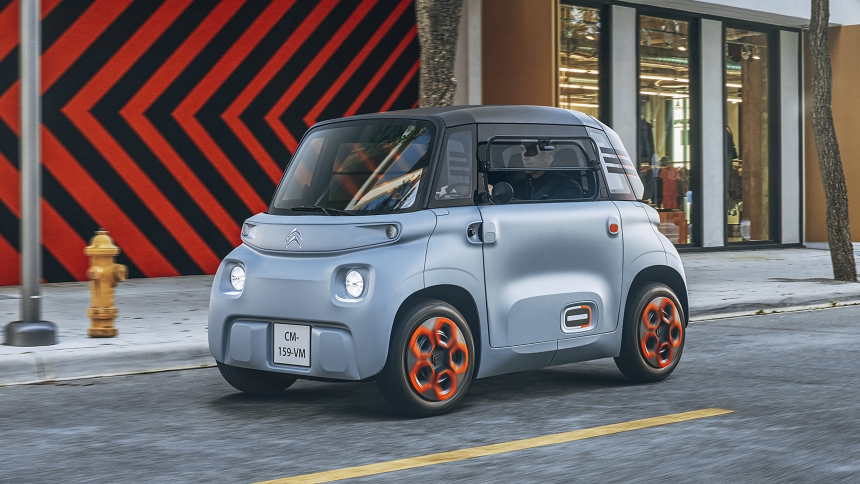
The Citroen Ami
The French have a history of making unusual and forward looking cars, this treads firmly in those footsteps. More importantly they have a history of actually making them a sales success. No, it’s not technically a car it’s a quadricycle meaning that (in France at least) people from the age of 14 can drive one. What it represents is a fascinating attempt at solving some short range transport issues common across the globe.
The Ami is intentionally cheap to manufacture and to buy. Costing £5000 puts it in the same price bracket as decent electric bicycles. The symmetrical doors, unpainted bodywork, toy-like wheels and small electric motor help keep costs low but functionality high. This is a niche vehicle created to cross cities or travel from village to town. Navigation and music are handled by your phone and the top speed is somewhere below 30mph.
Citroen are marketing the Ami firmly at inner cities, playing on its values as an eco-friendly commuter or for collecting shopping. There is clear merit in this and because it is new and chic there may well be a decent take-up. Certainly I hope it does well, society is still in love with the motor car and if this helps change the conversation around driving in urban areas I am all for it.
Personally though I hope for more, France is a rural country populated by hamlets, villages and small towns. The 2cv thrived in this environment allowing people to travel the short distances to markets, shops and garages with ease and practicality. The Ami has the potential to do the same, replacing the currently popular diesel Microcars with environmentally friendly alternatives. In Britain as well its role could be greater than just cities. Only a slight performance and range increase is needed to help it replace short range commuter vehicles.
Urban transport systems in cities work well, allowing the rapid movement of millions of people. What doesn’t work well is public transport outside of cities. Years of slicing transport budgets have left people reliant on the automobile, buses are no longer easily available. Electric cars have a large role to play in our future but they are simply to expensive. This, finally has the ability to change that. This is why it is exciting and worth supporting. Perhaps incongruous as it looks, the Citroen Ami might be our future?

The Toyota Previa
You have probably seen them on the highways of America or shuffling around the streets of Birmingham, This unremarkable vehicle going about its business ferrying kids to football practice and start-up bands to gigs. In your mind you can probably smell the velour interior and imagine the grey expanse of dash stretching away from you. On the surface this is a white good, a car for people who just don’t care and I quite like that but dig deeper and it’s a bit more special.
Toyota has a history of making both mundane and exceptional cars. Land Cruisers helped revolutionise reliable transport in the outback and the Celica GT4 was both a brilliant rally and road car. Their MR2 has always sold well, bringing mid engine fun (and rust) to the masses. In America the Camry is famed for its cockroach reliability and in the UK every minicab driver swears by the Prius.
So why then is the Previa interesting?
Toyota decided not to take the road most travelled and embarked on a development programme to place the 2.4 litre engine in the middle of the car. They then canted it heavily to ensure the passenger compartment could have a completely flat floor. It drove the rear wheels through a 5 speed manual or a 4 speed slushbox. The engine vitals were still accessed through the front bonnet but major maintenance was more involved than a normal car. Fortunately, being a Toyota it rarely needed major work and they proved decently reliable.
Doing things differently and pushing back against the norms in car design takes bravery and imagination. It takes talented engineers and for people at the top of the company to be willing to take a risk. Conservatism in car design is often for good reason but it is nice to see a company willing to push back against it.
A parting thought. It might be a bit dull to drive as standard but imagine turbocharging one to about 300bhp, putting a limited slip diff in the back and sorting the geometry. Picture that on your next trackday…
Let’s make something together.
 The Driven Wheel