I once fitted a set of Cheng-Shing tyres to an already ill handling Triumph T140 Bonneville. Nothing cured me quicker of crap tyres on bikes. I was 19 and had rebuilt the engine, put a hot cam in it, ported the heads with a Dremel and stuffed ram pipes on the carbs. The tyres were so crap that it would light the rear wheel up comfortably in the wet. Obviously I thought this was great fun until I ran out of talent on a wet corner in Staffordshire. The aftermath was a dinged headlight, tank and a few bent bits. I bounced for once, no broken bones and just a sore foot for my troubles.
50 years ago, people grew up driving Morris Minors on crossply tyres. Grip levels were low, sometimes scarily so in the wet. A premium was placed on cars that actually handled and were predictable when they did slide. Driving a car on tyres like this now makes you acutely aware of stopping distances and corner entry speeds. To be honest I love the challenge and enjoy the interaction which all happens at much slower speeds. Yes, they’re more dangerous but I frequently drive cars without mandatory seatbelts so it’s all relative.
In cars though I love a classic set of ditch-finders. I bought a 330i on “Evergreen” tyres, it was hilarious, no traction at all. I collected a Jaguar XJS on 20yr old Pirellis, it remains one of the easiest cars to drive sideways I have ever been in. Citroen, Peugeot, Fiat, BMW, front wheel drive or rear it doesn’t matter. Fit terrible enough tyres and the underlying dynamics of the car reveal themselves to you, generally at about 15mph on a slippy roundabout. If you want to learn about car control and vehicle dynamics then driving on crap tyres will teach you.
Now here is the hypocritical part, I may enjoy a car on crap tyres but I don’t fit them when I come to change. But why? I always think who wouldn’t want their daily driver, their wife’s car or their child’s car to stop and steer as well as it possibly could? Mostly, what crap tyres teach you is just how good modern ones are. Decent tyres are still fun and often a damn sight more progressive, crucially they grip when you run out of talent. Something that hardly ever happens, until it does…
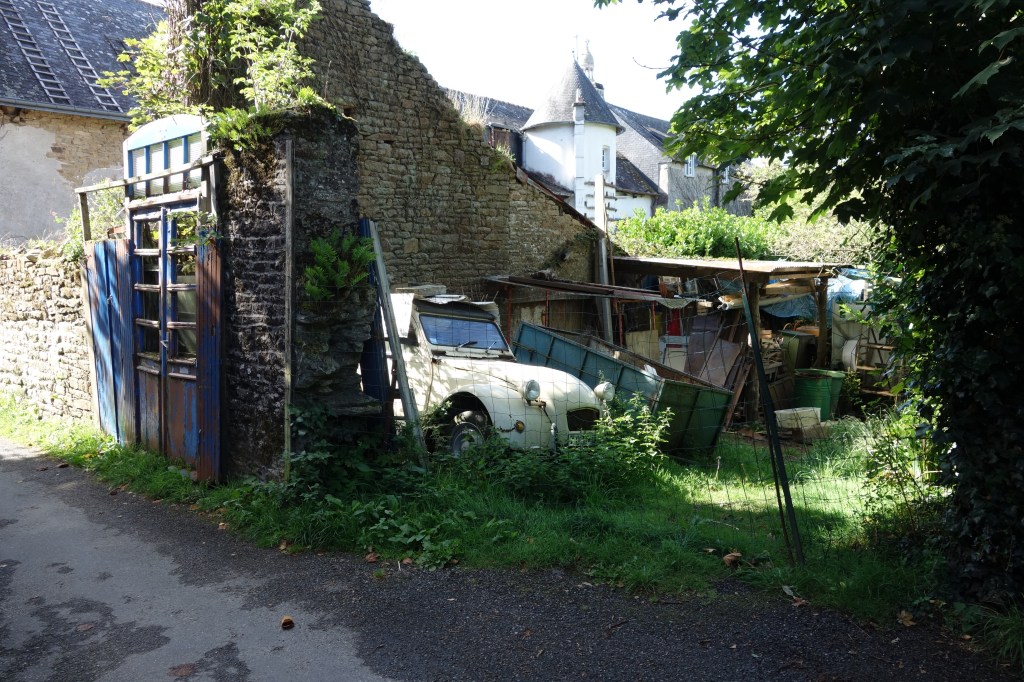
As a kid I was a very lucky boy in the holidays department. My Dad worked for British Rail which meant the whole family got free rail travel through continental Europe. For at least two weeks every summer we travelled, normally on sleeper trains thoughout France, Italy, Germany and Austria. I loved seeing the cars we didn’t have at home. I loved Panda 4x4s in the Italian Alps and Renault 4’s parked haphazardly around French markets. I loved how battered they all were, not a panel unscraped or wheel unkerbed. Most of all though I loved the Citroen 2cv’s, all fading in shades of grey, white or red, half a farmyard hanging out the back and pretty much worthless.
The first time I drove a 2cv was in France, we used it to run to and from the beach and I loved it. 4 gears and a punch change, 1st back and down towards you and then a long, elongated push and twist motion to get 2nd. Enormous thin rimmed wheel in front of you and flip up windows wide to coax in the breeze. Corners taken flat out, lifting meant losing momentum, not an option. The springy seats, no seatbelts and a door which would occasionally self open made a distinct impression. I loved how simple it was, how well it rode and how elated I was after coaxing it to 70kph. I love fast cars but for making you happy, on the right day, right road and with the right people the 2cv is the best car in the world.
Over the years the French have consistently produced some of the most innovative cars ever made. The Citroen Traction Avant popularised front wheel drive, flying in the face of convention at the time. Their DS a few decades later was and remains an extraordinary engineering exercise. The Renault Espace in the 90s revolutionised how we think about space in cars. They didn’t just innovate, they had the imagination to try things in France other manufacturers wouldn’t dare. They built mad things like Renault Turbo2’s and Clio v6’s. Anything Peugeot built with “Rallye” written on it is frankly brilliant. The 205gti looked gorgeous and drove better. The thing is though, even the base models were great. A sheddy Saxo 1.1 is a great drive as frankly is a Peugeot 406 diesel. The ZX, BX and Renault 5 were all fun in a way their German or British competitiors just weren’t. The French understood how to make cheap cars great.
Today there is a sense the French have lost their way, new laws mean the end of the hot hatch. The end of an era, a very sad time indeed. Since the mid 2000’s some truly awful cars have come out of France. Go and drive a Peugeot 3008 if you want to know how far they have fallen. All is not lost though, Alpine are producing their brilliant A110, a car that shows there are still artificers in France who care deeply. The wonderful and tiny Citroen Ami looks set to revolutionise inner cities, its cost alone should make other manufacturers take note. Lets not give up hope, they made ordinary things great in the past, lets hope for an extraordinary future.
A Europa in good fettle requires concentration to drive. Even when they are right they can be little buggers on the limit. The steering is quick and keen to turn in, they are unstable. With practice you can make all four wheels slide and revel in this. Driving quickly there is little to no understeer. Unlike most cars, more throttle makes the front bite harder and will start to bring the rear around. Lift at this point and it will try and put you in a hedge. In the wet this is magnified. Wet weather and the light weight of the front end means aquaplaning, especially if you have wide tyres. Make no mistake, these can be nasty cars. When they are sorted and on the right road or track they are pretty unique. They can pull over 1g cornering on crossply tyres and the speeds you can enter corners takes some adjustment. They are more than capable of being driven slowly and apart from a tendency to follow lorry ruts are relaxing to do so. You can cover large distances in decent comfort and with some sound deadening are not to noisy either. Driving is what these cars are about and they present a challenge to do so well. In a decade I wouldn’t claim to have mastered it but here are my thoughts regardless.
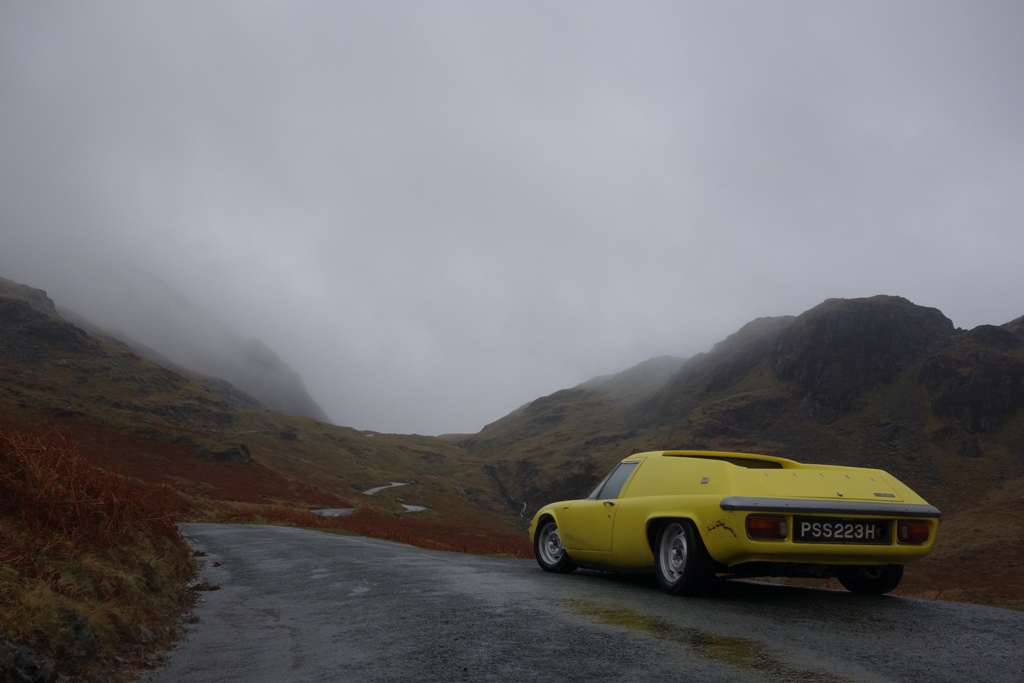
In Cumbria during heavy rain
The Europa has some interesting quirks; on standard suspension at least they have a curious trait of the front turning in and the rear following fractionally later. This is unsettling until you get used to it and seems a product of its geometry and rear suspension design. Suspension travel itself is quite limited meaning on bumpy roads its quite easy to use all of it. The ride is good for a sports car, its compliance makes it relaxing and the steering effort is light. Steering is unassisted, fast and direct. It is a very easy car to overcorrect when it starts to slide, minimal inputs are what it thrives on.
To drive it quickly you have to be very measured with steering input. On fast roads or track you rarely need more than a quarter turn of lock. You want to actively chase the throttle thorough the corner with the car loaded up. Corner speeds when doing this are very high, it doesn’t have the power for slow in fast out driving so maintaining momentum is the way to go. Oversteer in corners is more often a case of having lifted off and shifted the weight away from the rear rather than overpowering the rear tyres. It responds well to trail braking and if you want all four wheels to slide consistently, this is the best way of achieving it. It is important to emphasise the care needed on turn in when trail braking, the car does want to rotate and it needs careful managing to ensure it stays settled! Over bumpy tarmac it simply does not have the suspension travel to be driven like this unless you go stiffer on the spring rate.
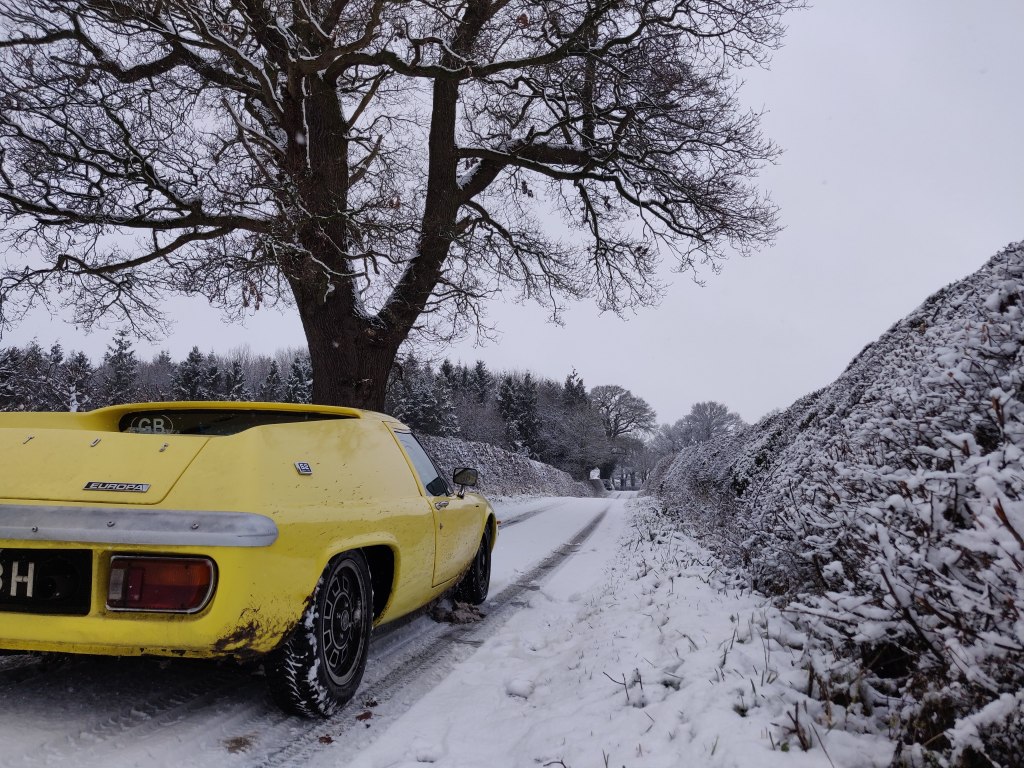
In the snow
Poor gearchanges in these cars are well documented and even when everything is renewed they are not positive in the traditional sense. Hurrying the gears can result in beating the synchros so mechanical sympathy goes a long way. Learning where the gears are is important in a Europa, the gate feels different to most other cars and is not as well defined. With practice, fast gearchanges are possible but only relative to the period the car was made. Modern manual gearboxes are a robust joy in comparison.
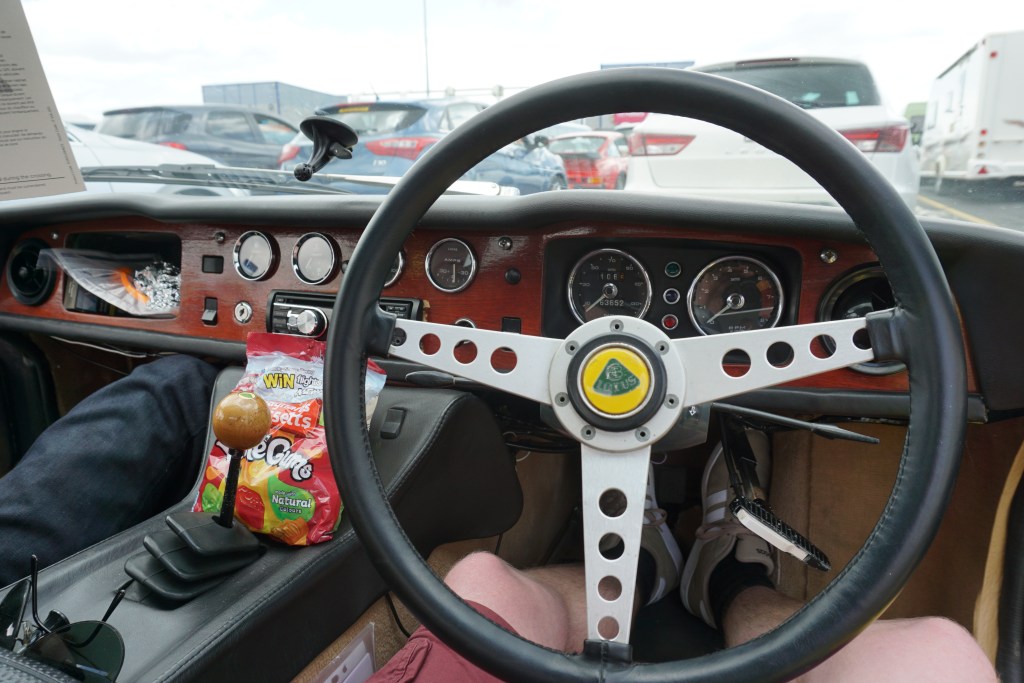
Pedals are tightly squeezed together; people with feet over size 10 can struggle. Most cars you brake with the sole of your foot but in these the pedals are so close you need to use your toes. I use the side of my foot to heel and toe and when used to the size constraints it’s no more difficult than any other car. There is no rest for your clutch foot so on longer journeys I alternate between bringing up my left knee and resting it on the centre console or hooking my foot below the clutch assembly if I want to stretch. If you are over 1.8m you need to try driving one to make sure you fit before buying. The cabin is snug and the seats although adjustable do not go back that far. The clutch action is light enough but you cannot pivot your foot using your heel like a normal car. Instead you have to use your toes which at first makes pulling off a challenge. You get used to it…
Camping at Le Mans
Renault engine cars as standard feel underpowered. They still have a decent top speed because of the low drag coefficient but are always working hard. Engine swaps to more modern Renault crossflow units are commonly done. Unlike most classics, not having the original engine does not have a detrimental effect on the value. A crossflow swapped car is much more powerful and fast enough to work the chassis properly. Anything over 120bhp is fast enough coupled with the cars light weight to make them fun. Lotus Twin Cam cars are powerful enough as standard but can be tuned for more if desired.
Aerodynamically, Lotus put a lot of effort into creating a slippery shape. This is great for getting a high top speed with a low power engine and also makes them good on fuel. However, when fitted with something more powerful they have an even higher top speed and start to get unstable. The top speed of mine should be somewhere in the 130mph region but anything over 120mph and its starting to get genuinely unstable. Lotus themselves recognised this and fitted a front splitter to the Twin Cams to resolve it. Probably worth doing if you want to run at high speeds consistently.
Braking at high speeds will make the car move around. The degree to which it does this is dependent on fuel load, luggage, weight of driver and passenger and just how hard you are braking. Although I have never done it, I suspect it is entirely possible to spin one in a straight line by braking hard and insufficiently correcting the steering.
Stability is critically affected by the condition of the rear hubs. Driven normally the bearings last about 20,000 miles but driven hard this can decrease considerably. The hub splines wear as does the hub itself. When any of this happens and you get play in either of the rear wheels a Europa is genuinely dangerous. Depending on how bad the play governs how unstable the car gets. You will feel the car start to become more unbalanced but if you drive the car a lot you can adjust to it. It is worth checking the rear wheels regularly before the car spears itself through a hedge.
On the right piece of tarmac and on the right day this is a very very special car to drive. It is capable of going down a road with finesse and delicacy uncommon to most other cars. What it felt like to drive one of these in the 60s I can only guess but it must have been pretty spectacular. If you want challenging, rewarding and deeply flawed then perhaps you should consider one. I have had mine for a decade and driven it in some totally unsuitable situations. It has been reliable (by 60s Lotus standards) and I cannot for the life of me think what I could replace it with. The journeys, memories and yes its imperfections add up to something extraordinary. It’s enough to make an unsentimental man well, sentimental.
Click above to listen to the audio version of this articleRoad trip and surfing in the south of France
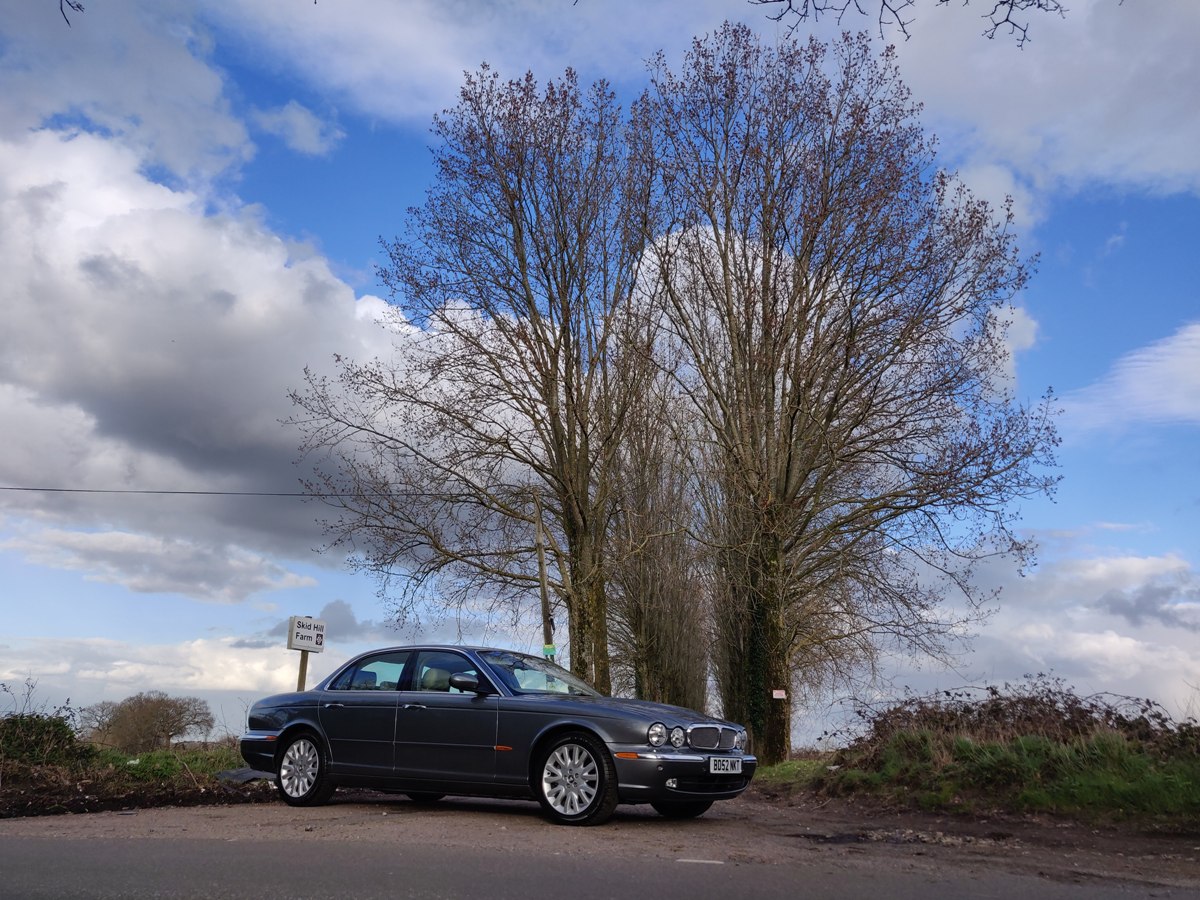
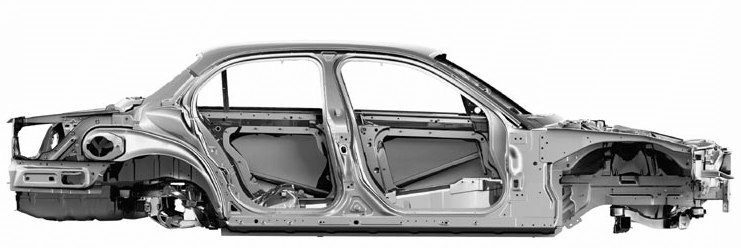
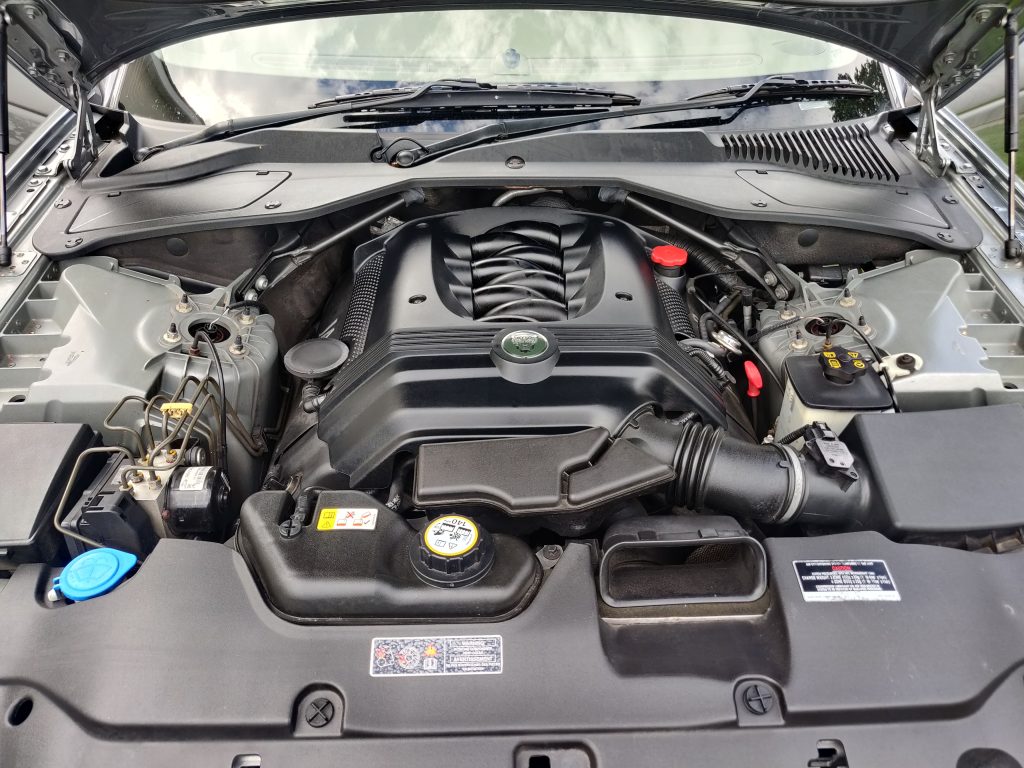
Made by Jaguar between 2002 and 2009 before being superseded by the X351. These are all four door saloons with a long wheel base option for chauffeuring duties. All are rear wheel drive with power being fed through a ZF6 automatic gearbox. The engine range starts with the V6 petrol, then a couple of V8’s and finally a supercharged V8. In 2005 Jaguar introduced the V6 diesel variant which improved fuel economy and was a popular option. For the X350 Jaguar used an all aluminium body which reduced weight over its predecessor and importantly made it lighter than its direct competition.
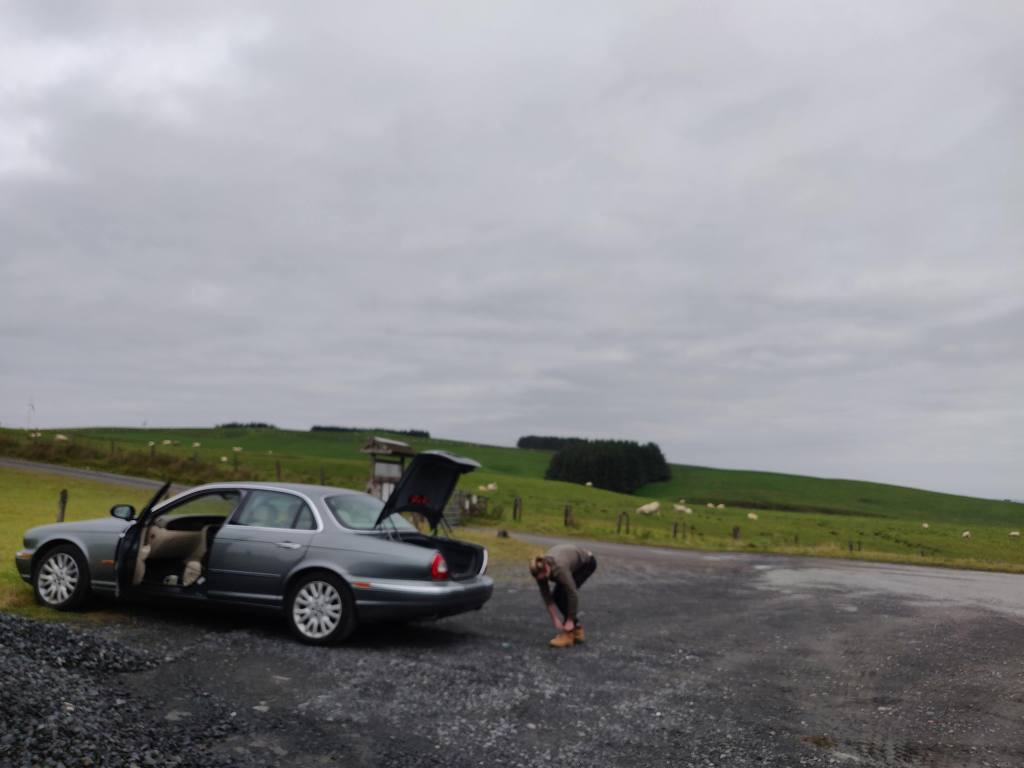
This is a car designed for motorway cruising and fast A road driving. Capable of taking four adults in leather seated luxury to the south of France or cruising boulevards in LA. Easygoing automatic gearbox and light steering combine to make an easy to live with, easy to drive companion.
Bodyshell
Classical styling and conservative looks belie the complexity of construction beneath; these are complex bodyshells utilising advanced construction techniques. The aluminium body relies on a system called riv-bonding which uses adhesive and self piercing rivets to hold it together. Bonded aluminium has been popular in the aircraft industry for decades because of its light weight but it came later to the auto industry. Manufacturers had used it but this was the first mass market car to feature it extensively. The process of assembling the shell involves applying an adhesive before clamping the parts together and heat curing it. Self piercing rivets require no pre drilling which saves time in manufacturing and these are used to further strengthen the joints. There are also a number of bolts and spot welds used where these methods are inappropriate. All together these techniques made the bodyshell 40% lighter and 50% stiffer than its forebear.
The issues regarding repair of bonded structure cars are well known. Lotus pioneered the bonded chassis in road cars with the Series 1 Europa. This had a steel chassis bonded into the fibreglass and was exceptional for stiffness but near impossible to repair cost effectively after an accident. The Series 2 used a bolt in chassis to ameliorate this problem.
It is difficult to replicate heat curing adhesives and self piercing rivets in a small bodyshop environment. To this end Jaguar used a bolt on crash structure capable of absorbing impacts up to 10mph which helps both reparability and insurance costs. It is possible to repair these bodies to a very high standard but not generally using the factory build techniques.
The aluminium is prone to corrosion especially on the earlier cars. Attention needs to be paid when buying one now as good quality paint and corrosion repair is not cheap. The areas which mostly corrode are the door bottoms, front and rear windscreen frames and around the boot. Like any corrosion the sooner it is treated the better.
Suspension and Drivetrain
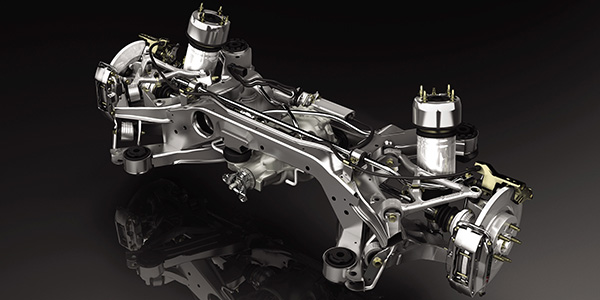
Suspension is by Macpherson strut at the front end and double wishbone at the rear. All cars have air suspension on all four corners and are capable of lowering themselves over 100mph for stability.
The ride quality is good but not quite as good as its steel sprung predecessor the X308. The reality is the damping is of good quality and the car rides well and is composed over small or large bumps.
The 4.2 litre V8 engine is a quad overhead camshaft design driven by chains. The earlier series of V8 engines had plastic chain tensioners which tended to come apart with age. These later ones use a stronger tensioner design and do not suffer from the same issues. Serviced regularly they are very reliable and easy to live with. This naturally aspirated V8 delivers 300bhp to the rear wheels. It lacks in torque compared to its modern turbocharged counterparts but makes up for it with smoothness.
Jaguar decided not to fit any of these cars with proper LSD’s, relying on stability control to keep you on the road instead. This cost saving exercise does impact driving in slippery conditions or when cornering quickly but for most owners this will not be an issue.
The ZF6 automatic gearbox was game changing when introduced. Its ability to lock up every gear using clutches and self learning capabilities make it impressive today. It suits the character of the car and is smooth and reliable if serviced. Jaguar say it is sealed for life but ZF recommend changing the fluid every 70,000 miles.
Driving
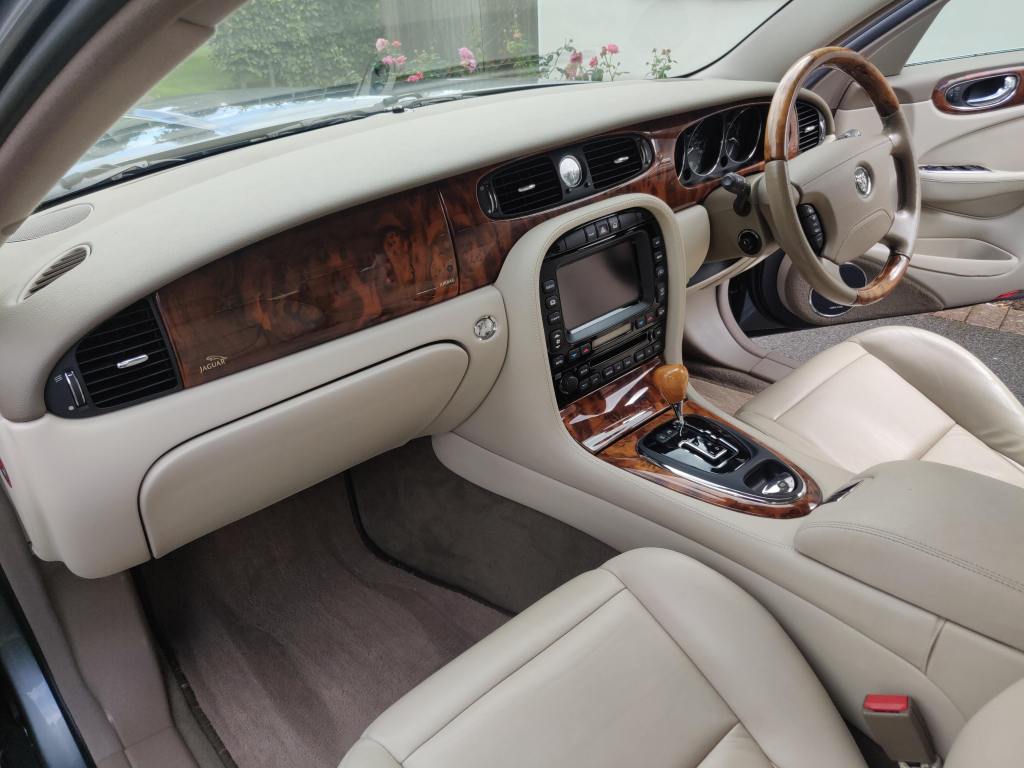
Sit down in an XJ and the wheel comes electrically to greet you as the seat slides forward. Seats are leather and adjustable every which way to get you comfortable. Jaguar spent money on an electrically adjustable pedal box which sounds like a gimmick but in reality is useful, allowing you to get close to a perfect driving position. Contact points are all excellent with the half wood steering wheel being particularly pleasant to use.
Infotainment and climate control systems are dated but easy to use. The touch screen display is still responsive and intuitive. The stereo is overall very good, not as sharp as more modern premium audio but decent all the same.
This being a “J Gate” gear selector, safety interlocks for the auto gearbox are rudimentary which is brilliant for usability. Pulling the lever straight back knocks you into drive without pushing a button and the handbrake automatically comes off. Obviously it’s not difficult to push a button to select a gear but it’s nice not to have too and suits the ethos of the car. The J gate selector also allows you to limit what gears the car can use, if you say select “3” then it can use gears 1 through to 3. This is useful if you want to drive the car quickly but is a halfway point to actually being able to manually pick and hold gears.
The way the ZF6 gearbox is mapped is interesting and different to cruder traditional autos. At say 50mph if you want more power to overtake you squeeze the throttle and it will drop a gear to fourth or perhaps third. Even if you use full throttle it will not drop all the way to second where peak power is. If you do want peak power, pushing harder activates the kickdown switch which will engage second gear and give maximum performance. One of the reasons for avoiding automatics is the kickdown is nearly always a jerky affair so it is nice to have a gearbox less keen to use the function.
Driven around town the throttle mapping is too sharp on initial take-up making it easy to lurch out of junctions. It takes practice to drive it really smoothly and the gearbox when cold is susceptible to thumping slightly the 1st to 2nd transition. On the motorway or faster roads the throttle mapping feels entirely normal and the gearbox is smooth. The motorway and fast A roads really are what this car was built for and where it excels. The level of refinement on offer is impressive and the performance is adequate if not fast. In a straight line the car is very stable even well into 3 figure speeds allowing you to concentrate on the road rather than keeping the car inline.
Driven quickly well… It is pretty compromised to be honest. On a bumpy road the car really does fall apart. Despite its light weight for the class it’s still a heavy car and very easy to run out of suspension travel over bumps or compressions. This can all be mitigated to some extent with driving style but you don’t need to drive it that quickly to experience this. Traction in the dry for the 300bhp model is excellent with only a really determined right foot in first gear getting a rear tyre to spin. During cornering its again okay in the dry but does spin up the inside wheel without too much effort. In the wet it’s passable for traction but really wants an LSD to put the power down more effectively and predictably. The oversteer transition is dealt with clumsily thanks to the open differential and soft spring rates. If you are so inclined it will do skids but needs overaggressive steering and throttle inputs to hold angles.
The steering itself is a hydraulically assisted rack with very light steering effort. Aligned to Jaguar specification the steering is a bit slow to self centre and turn in is slightly vague. This all helps it be as settled as possible at higher speeds. When the car is loaded up in a corner the feedback available is surprisingly good, much better than say an Audi A8 of the period. Overall the steering is a great compromise between stability, turn in and feel.
V8 engines always sound good and this is no exception. It is remarkably muffled with only a light, syncopated bass announcing its presence in the cabin. It would be nice if it made slightly more noise or perhaps had an exhaust valve setup but that’s nitpicking. You do need to rev the engine to get brisk performance out of it and when you do it is smooth and powerful enough for overtaking and road use. Around 300bhp often seems a nice compromise when you want decent performance but not full on lunacy. Remarkably the engine is truly capable of returning slightly over 30mpg on motorway runs. Combined with a decent sized tank this makes for a 400 mile plus range. Easily enough for regular long distance running.
Ownership Prospects
Like any car you need to buy these with your eyes open as there are plenty of tired examples. Find a decent one however and you can enjoy luxury motoring for a fraction of the cost of a new equivalent. They are prone to issues with water ingress and the aluminium bodies do corrode. There are plenty of specialists around to help run these cars cost effectively but buy a decent example and costs should be minimal. The engines are generally very reliable and the gearbox if serviced can get to over 200k miles.
In terms of looking after these cars at home it is entirely possible. A decent diagnostic tool such as Autel or Snap On is a must but the drivetrain is simple. Air suspension can give issues but the system has proven to be reliable as a whole and used parts are commonly available from breakers if on a budget. Individual electronic modules can fail, often due to water ingress but once diagnosed are easy to change out. If you are used to working on modern cars these are not really that complex.
Conclusion
These cars represent staggering value currently. They are still reliable, refined, powerful and capable of everyday use. Crucially they make the driver feel special in a way which big Jags do so well.
Large engine traditional saloon cars like these are deeply unfashionable at the moment. This is fantastic news if you want to experience a V8 on a budget. They are undoubtedly still depreciating but now at a very shallow rate so losses will be minimal.
These cars represent the end of an era for Jaguar. Traditional looks, handling, interior and range of engines make them dated by current standards. If you are happy to forgo fashion and want a special luxury car on a budget then these are definitely worth a look.
6am drinking coffee, vapours steaming from the cheap thermal cup combine with the petrochemical plastic smell of the interior. Outside it is just above freezing but warm air issues from the vents. The radio hums quietly, it’s the BBC announcing the news. Traffic is quiet to non-existent, from your vantage point you peer over hedges startling a fox. The road is wet and cadences of water fill the arches upon every puddle. Progress is swift as the headlights eke towards the horizon. You’re inexplicably content, knowing the day has just begun.
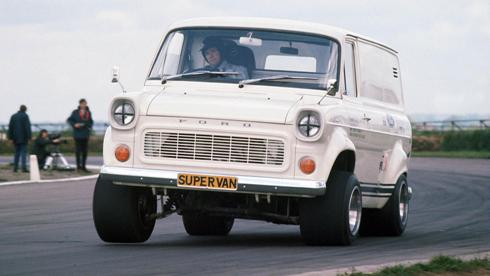
There is a childlike part of me that adores driving vans; I actively look forward to the new Transit or Transporter as much as I do most cars. I like the driving position, balloon tyres and great headlights. I like the big mirrors and the storage bins scattered piecemeal throughout the interior. I like their diesel engines clatter and their lack of pretention.
On one of many trips, a good friend and I took my Transit to Saalbach in Austria. In the back, snowboards and winter gear was safely stowed. The van, only just run in managed the 1000 miles comfortably in 16hrs. On the Autobahns it sat on its limiter at 114mph. We felt sure delimited there was 120mph for the taking. The snow was great for boarding, appalling for driving and as I had neglected to fit winter tyres we got a first hand impression of the Transits dynamics. It performed flawlessly, continuing undaunted through the Austrian winter. It was brilliant.
What makes a van exciting isn’t just the places it can take you, its what you can do with it. With a van you can move house or collect a motorcycle. You can fit a kitchen and nip to the local drive thru. At the weekend you can grab your mates and go surf, sleeping in the back, freezing your knackers off but having fun.
In winter when Britain grinds to a halt on its biannual snow day the delivery vans are still out, still getting though. Tradespeople every day cover miles, move timber and smoke scraggy roll ups in their vans. They are relied on for millions of people’s livelihoods, small businesses thrive with them and we cannot do without them.
There really is nothing they cannot do, get yourself one today and be smug.
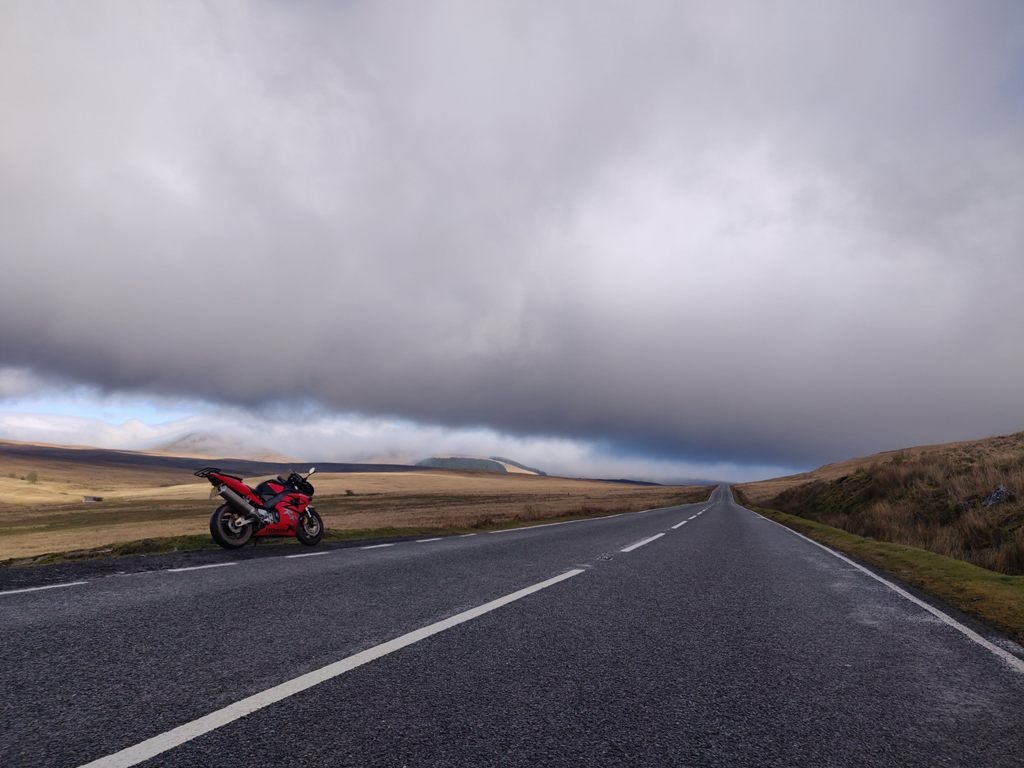
There is something pleasingly primeval about riding a motorcycle. It is not hard to do but the feeling it generates is one of happiness.
Great bikes and great cars for that matter are more than the sum of their parts, there is some indefinable magic, unexplainable voodoo which triggers endorphins and makes the world rest easy.
To ride a bike quickly is all encompassing. On the road, the consequences of even the most minor errors are magnified, heightening your awareness and making you at once a pawn and a master of your destiny. Likewise to ride a motorcycle slowly, sensations driven by exposure and solidarity with your surroundings brings true joy.
The white line is hugged, maximising your visibility through the bend, cognisant of the gravel dusting the centre of your lane. The forks dive as you squeeze the front brake, knees grip the tank as your left foot automatically toes the gears. Throttle and clutch work to stop the rear wheel locking and all the while you look for the turn in point. Your strip of road is 2ft wide, to your right is possible traffic and to the left gravel enough to make you think twice. Your fingers start to come off the front brake and you roll on the tiniest bit of throttle. Counter steering begins and you sense the bike tipping over. You can feel the front suspension unload slightly and sense the front tyre key into the tarmac. Now you wait, bike balanced, eyes focused on the vanishing point and throttle steady, everything as it should be. The corner begins to straighten and you wind on the throttle, feeling the weight transfer rearwards, too much and you’ll go wide, just enough and you will drive out determinedly to the horizon. You are in control, the road is yours to tame and to master. The bike is the conduit to your ecstasy.
That’s just one road and one corner. Yes it’s great to occasionally sit your brain on the shelf and ride approaching your limits. However, just covering miles, watching a county or a country slide by. Absorbing the tastes, textures and smells of city and countryside. Winding through country lanes, watching the sun rise or fall. Taking time to savour rather than dispatch. Knowing the next day brings more miles, more places. Eyes open to new experiences, people, views, memories and spaces.
Motorcycles are illogical, cars offer more protection and true rapid transit systems in cities nullify them. When it rains you get wet, sunny and you overheat. Riding bikes in spite of this makes us closer to them. Makes us appreciate them more.
When I started writing I wanted to illustrate why I ride a motorcycle, why it brings me genuine happiness, what makes me choose to ride rather than drive? The answer is multi faceted. My Grandpa rode bikes, transporting his family of four in a BSA and sidecar. He would buy bikes for fun, get them running and blast about on them before selling and repeating. My Dad rides bikes, buying one so he could travel to see my Mum. My families joy in the technology and familiarity with the danger made it an easy step for me to start riding. For me I was addicted to the machine by the age of 5. I loved anything that moved and preferably went fast. I rode my bicycle everywhere. I wore out tyres, trashed chains and sprockets, snapped forks and brake cables. I wheelied I stoppied, dropped off 6ft walls to flat and speared down concrete stairways. I crashed I fell and I broke bones. My enthusiasm remained undiminished. Motorcycles were the logical step and riding them or building them became and is a big part of my life. I think I ride motorcycles because they give me a sensation I cannot get anywhere else. It is not necessarily an endorphin rush, often it’s the humdrum of commuting or city riding that make me happy. There is something about a motorcycle that fills a hole in my life I didn’t know I had. A hole that will be there for ever, a hole I don’t know how to fill with anything else.
Wearing three shirts, one jumper, one fleecy coat and a waterproof over the top I lie on the wet ground swearing at the seized trailing arm bolt. My hands are numb and the coldness of the ratchet pressed against my palm defines me. I have slipped once and blood is flowing softly from my knuckles, probably I have tetanus.
Car maintenance in winter without a garage is an alpha sort of pursuit. I scoff at people lifting weights in a warm gym, they don’t know the meaning of pain. For some of you lucky enough to have somewhere warm and dry to house your cars and bikes I truly envy you. For the others who can afford to pay someone to do these jobs I also envy you. I also envy people with car lifts, I assume I am going to hell.
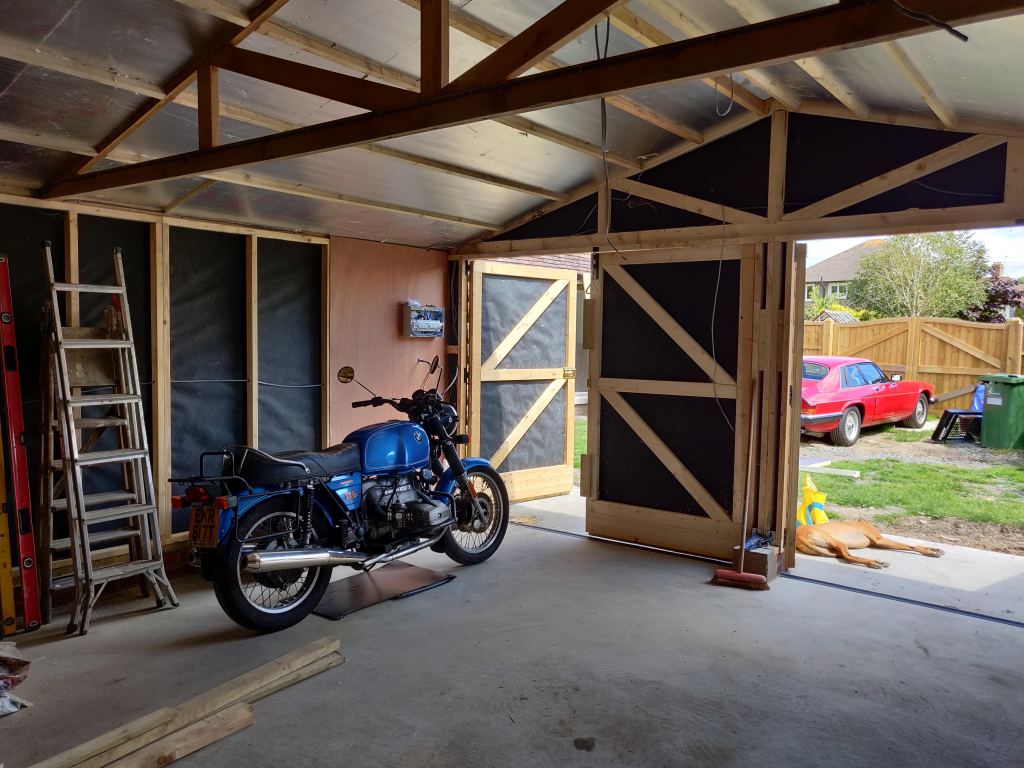
Last year I built a garage. 32 years on this earth and for the first time I can work on vehicles in the warm and dry. My life has been revolutionised, I can leave things in pieces and come back to them the next day without parts going missing off my drive. My cars no longer fill up with water and grow mushrooms on their carpets. My bikes are tucked away on trickle chargers and I have a workbench.
I love the possibilities it has opened up. You might look and see a glorified shed, I see the culmination of years of work and saving, trying to buy a property with enough land and having enough money to build one.
To butcher a movie line, this is my garage, there are many like it but this one is mine.
Yes, yes a subject done to death by rows of clones clamouring on about how they won’t be buying a new Porsche gt3 when in reality they drive a diesel VW. In the UK around 40% of buyers now choose an auto gearbox. Consumers, especially of premium cars demand them and it is recognised most people want less, not more interaction from their vehicles. Apple or Android car play are more important to buyers than manual gearboxes, they are dying out.
I have never really held with the argument that “automatics are so much better in traffic”. Unless you’re driving an old GT40 or Scammel lorry then the clutch is unlikely to be particularly weighty. Likewise the action of changing between gears is simplistic, lightweight and with practice fairly seamless. Mostly though, I like that it gives you something to do. Any car in my eyes is improved by a manual gearbox, I like the additional control, I like the pleasure of getting a shift just right, I like punching down unnecessary gears to hear the engine. I accept that most of this isn’t rational or even necessary but neither is owning a dog or playing cricket.
Let’s focus on rev matched downshifts. The action of blipping the throttle with the clutch dipped, engaging a lower gear and then timing the clutch action to make it completely seamless. It isn’t easy; it took me years to get really good at it. Every time I got it wrong I would do it again until I got it right. This stubbornness, the fact it’s a hard earned skill and the satisfaction of getting it just right all contribute to why I love it. Oh and yes, it is completely unnecessary with a modern synchromesh gearbox.
Heel and toe gear changing is a bit of a misnomer. I often use the side of my foot to blip the throttle or the arch of my foot depending on how the pedals are laid out. It’s the same as rev matching just with the added complexity of braking at the same time. It’s easier when braking hard but great to practice while braking gently if you truly want to get a feel for it. When I first tried it I was shockingly bad, it took a lot of practice. For the avoidance of doubt, just like rev matching, it should be completely seamless. You should not feel a jerk as you come off the clutch! It’s hard but when it becomes second nature it allows your driving to flow in a way that’s impossible without learning this skill.
I love the slightly elastic feel of all BMW manuals and their elongated throw. I love the vagueness of a Transit van with worn selector cables. I love the challenge of a Land Rover who’s synchros long became golden glitter floating in the oil pan. I love the knuckly, springy and recalcitrant change in my Europa. I love the “schlack” noise of an open gate. Mostly, I love that I have grown up in an era when they are commonplace. The future, whether electric, hydrogen or synthetic fuel is a 2 pedal dystopia so lets celebrate the anachronistic relics while we still can. Long live the manual box.
Worn interior, slippery silicone on the dashboard, kerbed alloys and a suspicious tapping from under the bonnet. You my friend have chosen your hire car well. Not for you the upgraded “premium” Volkswagen which still smells of new car. You chose wisely, cheapest hire car company and a sales desk based out of a caravan, perfect.
Apparently it is possible to hire a decent car but I have never managed it and nor do I want to. I love booking and being shown a picture of a smart little Ford Fiesta. When I arrive it’s a Kia Picanto with 150ks on the clock but am I disappointed? Frankly, the worse the car, the better. It means I can drive it unworried about parking scrapes, door dings or probably even major structural damage.
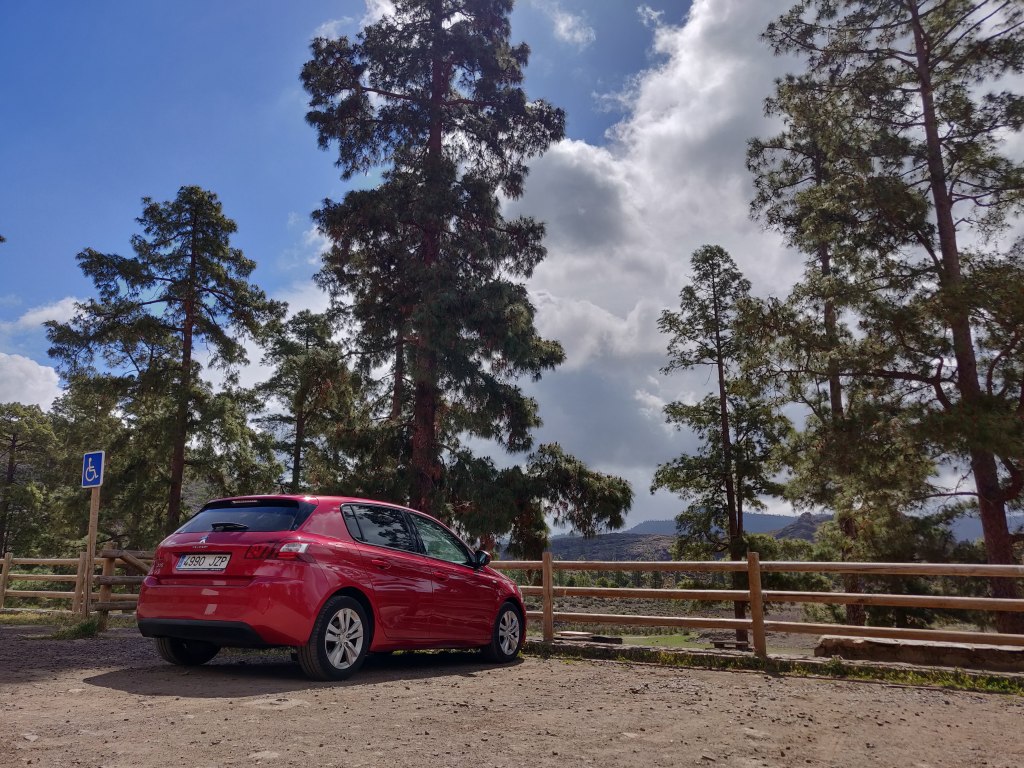
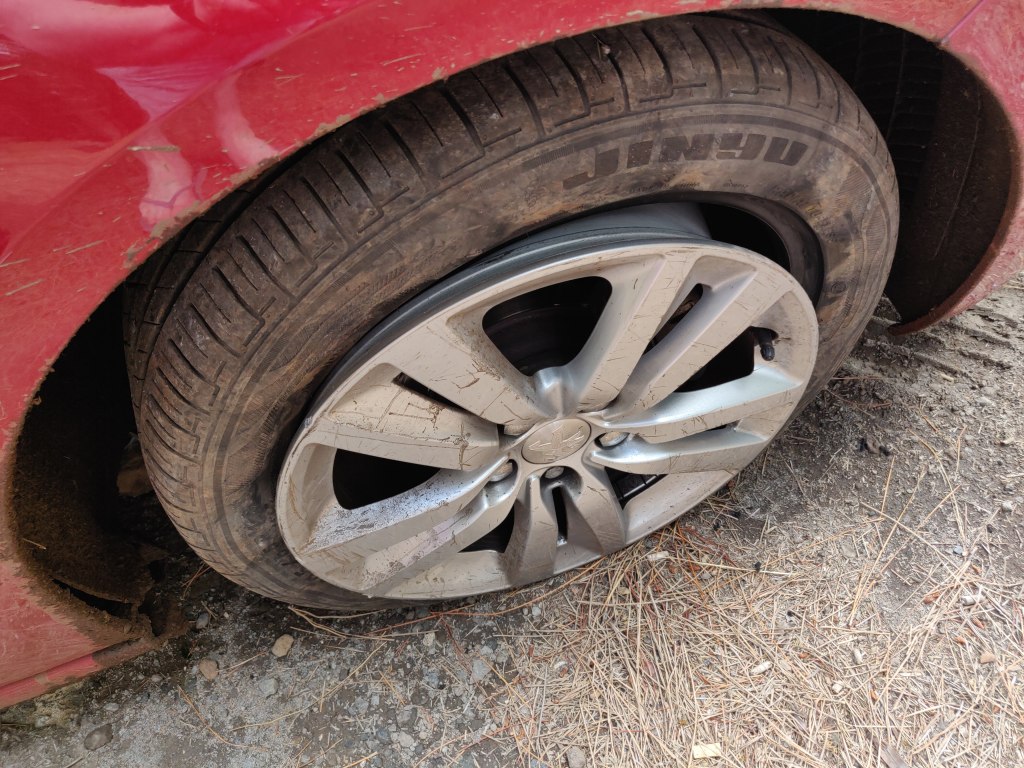
I bounce between the upgrading the insurance and not bothering. I once paid the full excess on a Peugeot 308 after some spirited rally driving in Gran-Canaria. My confidence was high, my talent was low and the end result was predictable. Getting the car back to the main road from the forest track was the first hurdle. A task I skilfully accomplished at the cost of some wheel rims. Because the contract stipulated I wasn’t to drive the car off road I was slightly worried by this point. I spent 10 minutes rolling a huge boulder and placing it just off the main road, smashing it with another rock to simulate me supposedly hitting it. My girlfriend watched this in silence before quietly informing me between tears of laughter that I had smashed up an enormous boulder on the left side of the road. Shame really that they drive on the right but by this time the recovery truck had arrived. They swapped my broken 308 for another terrible Peugeot and I was on my way.
Just some of the damage…
Over the years, that’s the only one I have damaged but I have been fortunate to drive some awful cars in beautiful places. It’s nice to be reminded that I like driving and sometimes, the car isn’t important, it’s the place you’re in.






 The Driven Wheel