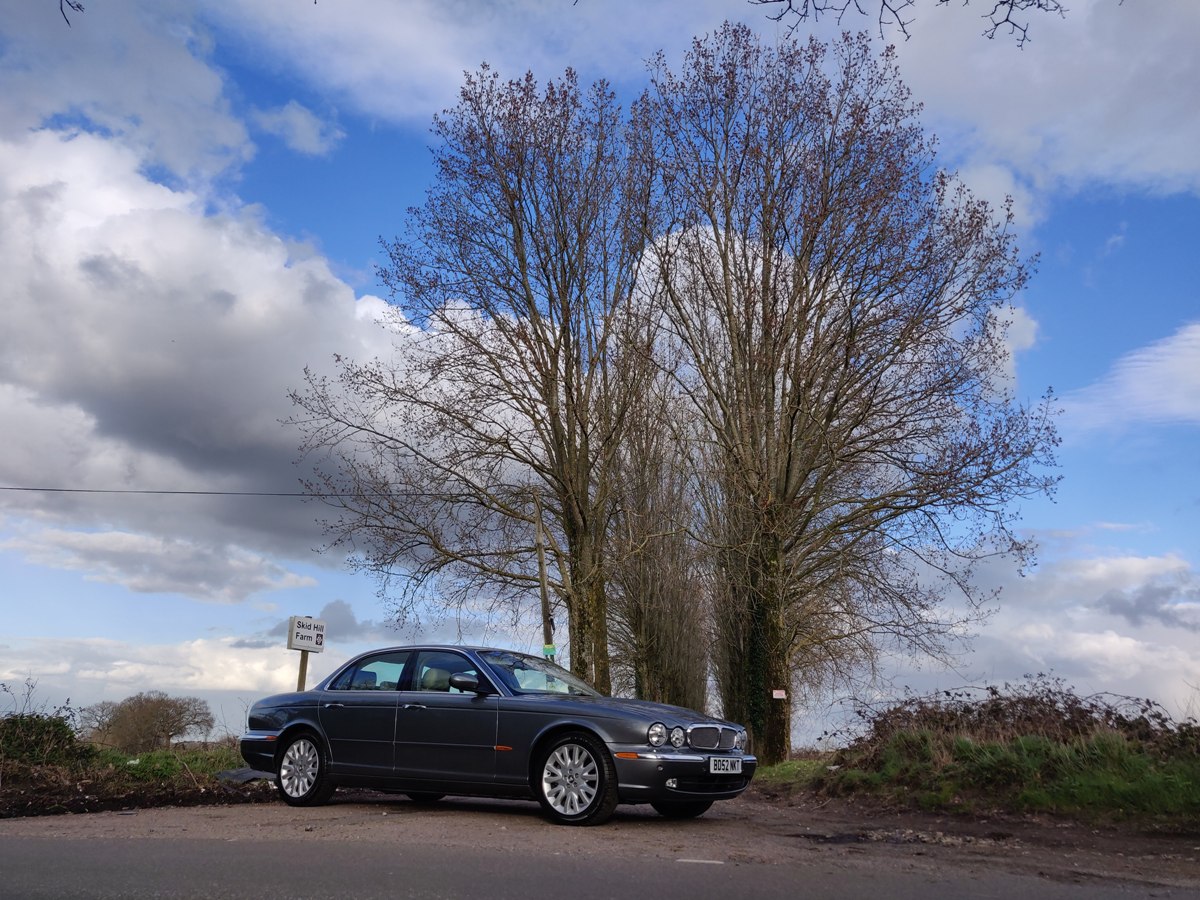
The Jaguar XJ8 X350
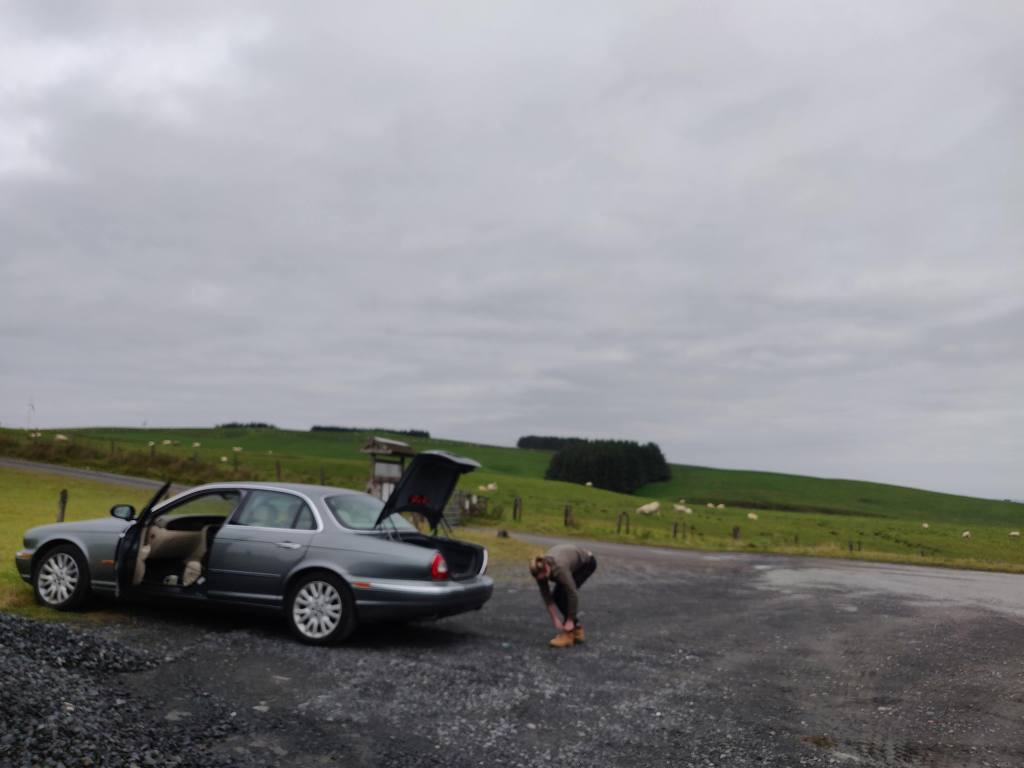
Made by Jaguar between 2002 and 2009 before being superseded by the X351. These are all four door saloons with a long wheel base option for chauffeuring duties. All are rear wheel drive with power being fed through a ZF6 automatic gearbox. The engine range starts with the V6 petrol, then a couple of V8’s and finally a supercharged V8. In 2005 Jaguar introduced the V6 diesel variant which improved fuel economy and was a popular option. For the X350 Jaguar used an all aluminium body which reduced weight over its predecessor and importantly made it lighter than its direct competition.
This is a car designed for motorway cruising and fast A road driving. Capable of taking four adults in leather seated luxury to the south of France or cruising boulevards in LA. Easygoing automatic gearbox and light steering combine to make an easy to live with, easy to drive companion.
Bodyshell
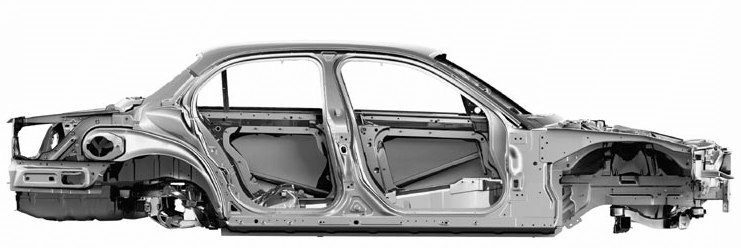
Classical styling and conservative looks belie the complexity of construction beneath; these are complex bodyshells utilising advanced construction techniques. The aluminium body relies on a system called riv-bonding which uses adhesive and self piercing rivets to hold it together. Bonded aluminium has been popular in the aircraft industry for decades because of its light weight but it came later to the auto industry. Manufacturers had used it but this was the first mass market car to feature it extensively. The process of assembling the shell involves applying an adhesive before clamping the parts together and heat curing it. Self piercing rivets require no pre drilling which saves time in manufacturing and these are used to further strengthen the joints. There are also a number of bolts and spot welds used where these methods are inappropriate. All together these techniques made the bodyshell 40% lighter and 50% stiffer than its forebear.
The issues regarding repair of bonded structure cars are well known. Lotus pioneered the bonded chassis in road cars with the Series 1 Europa. This had a steel chassis bonded into the fibreglass and was exceptional for stiffness but near impossible to repair cost effectively after an accident. The Series 2 used a bolt in chassis to ameliorate this problem.
It is difficult to replicate heat curing adhesives and self piercing rivets in a small bodyshop environment. To this end Jaguar used a bolt on crash structure capable of absorbing impacts up to 10mph which helps both reparability and insurance costs. It is possible to repair these bodies to a very high standard but not generally using the factory build techniques.
The aluminium is prone to corrosion especially on the earlier cars. Attention needs to be paid when buying one now as good quality paint and corrosion repair is not cheap. The areas which mostly corrode are the door bottoms, front and rear windscreen frames and around the boot. Like any corrosion the sooner it is treated the better.
Suspension and Drivetrain
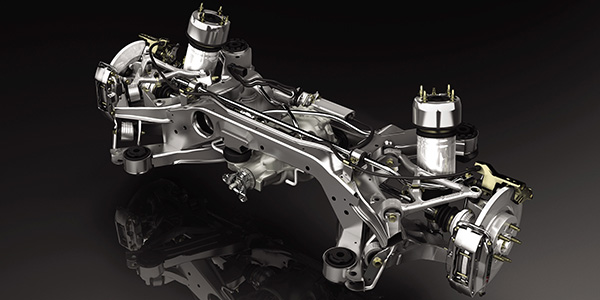
Suspension is by Macpherson strut at the front end and double wishbone at the rear. All cars have air suspension on all four corners and are capable of lowering themselves over 100mph for stability.
The ride quality is good but not quite as good as its steel sprung predecessor the X308. The reality is the damping is of good quality and the car rides well and is composed over small or large bumps.
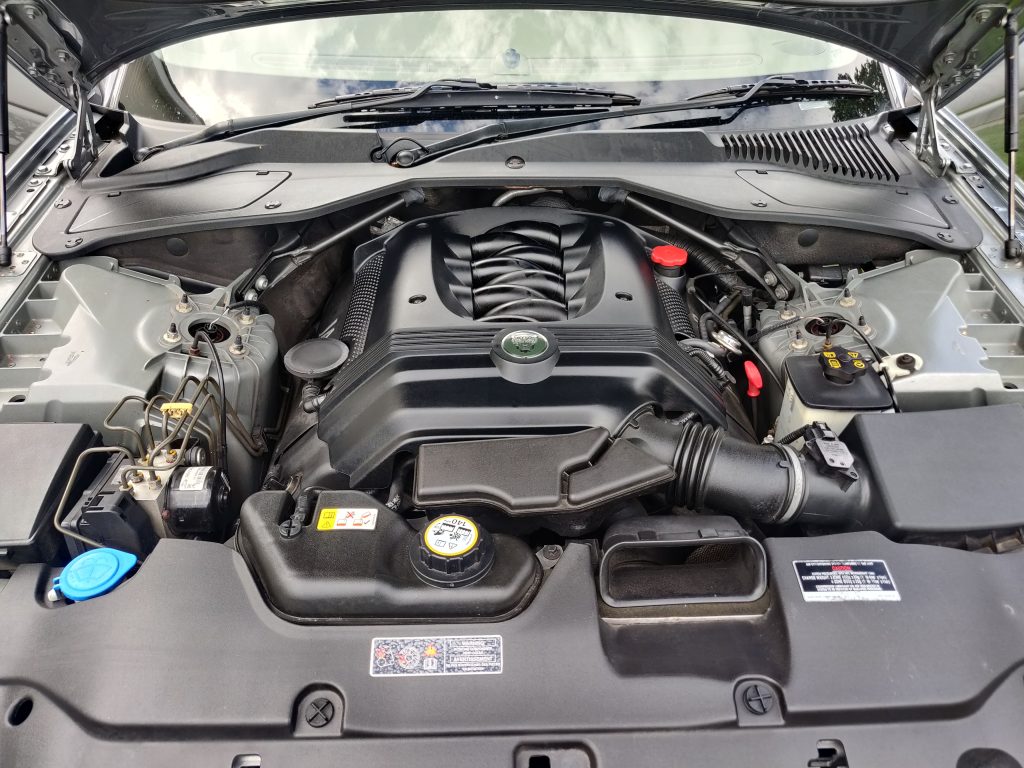
The 4.2 litre V8 engine is a quad overhead camshaft design driven by chains. The earlier series of V8 engines had plastic chain tensioners which tended to come apart with age. These later ones use a stronger tensioner design and do not suffer from the same issues. Serviced regularly they are very reliable and easy to live with. This naturally aspirated V8 delivers 300bhp to the rear wheels. It lacks in torque compared to its modern turbocharged counterparts but makes up for it with smoothness.
Jaguar decided not to fit any of these cars with proper LSD’s, relying on stability control to keep you on the road instead. This cost saving exercise does impact driving in slippery conditions or when cornering quickly but for most owners this will not be an issue.
The ZF6 automatic gearbox was game changing when introduced. Its ability to lock up every gear using clutches and self learning capabilities make it impressive today. It suits the character of the car and is smooth and reliable if serviced. Jaguar say it is sealed for life but ZF recommend changing the fluid every 70,000 miles.
Driving
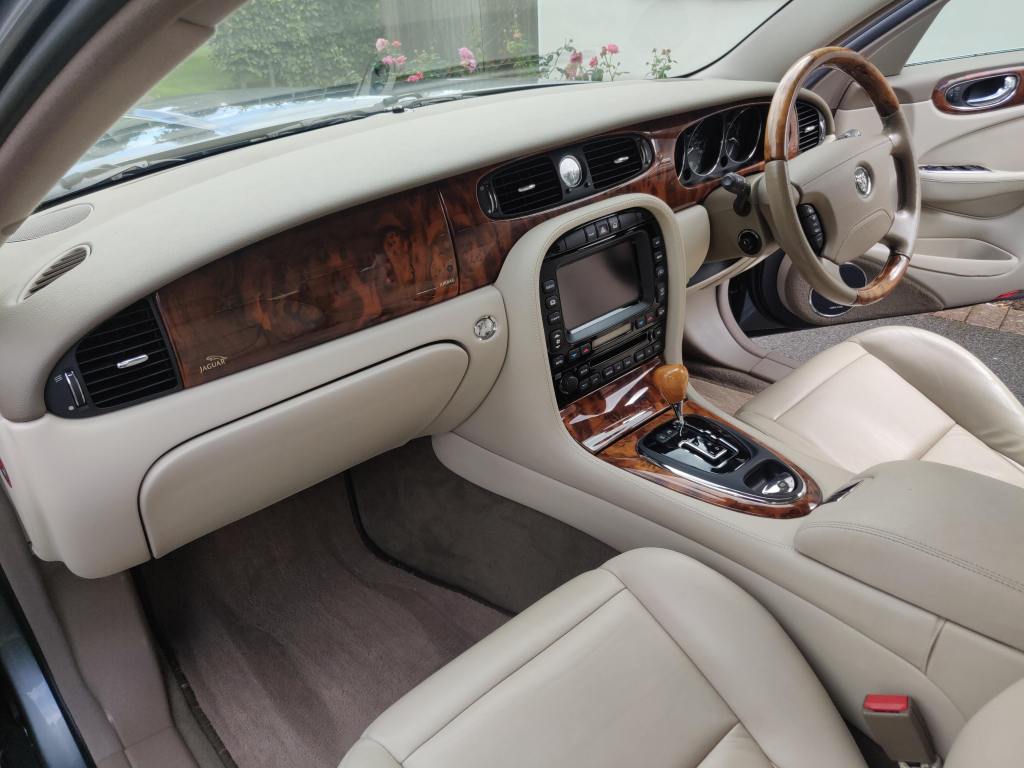
Sit down in an XJ and the wheel comes electrically to greet you as the seat slides forward. Seats are leather and adjustable every which way to get you comfortable. Jaguar spent money on an electrically adjustable pedal box which sounds like a gimmick but in reality is useful, allowing you to get close to a perfect driving position. Contact points are all excellent with the half wood steering wheel being particularly pleasant to use.
Infotainment and climate control systems are dated but easy to use. The touch screen display is still responsive and intuitive. The stereo is overall very good, not as sharp as more modern premium audio but decent all the same.
This being a “J Gate” gear selector, safety interlocks for the auto gearbox are rudimentary which is brilliant for usability. Pulling the lever straight back knocks you into drive without pushing a button and the handbrake automatically comes off. Obviously it’s not difficult to push a button to select a gear but it’s nice not to have too and suits the ethos of the car. The J gate selector also allows you to limit what gears the car can use, if you say select “3” then it can use gears 1 through to 3. This is useful if you want to drive the car quickly but is a halfway point to actually being able to manually pick and hold gears.
The way the ZF6 gearbox is mapped is interesting and different to cruder traditional autos. At say 50mph if you want more power to overtake you squeeze the throttle and it will drop a gear to fourth or perhaps third. Even if you use full throttle it will not drop all the way to second where peak power is. If you do want peak power, pushing harder activates the kickdown switch which will engage second gear and give maximum performance. One of the reasons for avoiding automatics is the kickdown is nearly always a jerky affair so it is nice to have a gearbox less keen to use the function.
Driven around town the throttle mapping is too sharp on initial take-up making it easy to lurch out of junctions. It takes practice to drive it really smoothly and the gearbox when cold is susceptible to thumping slightly the 1st to 2nd transition. On the motorway or faster roads the throttle mapping feels entirely normal and the gearbox is smooth. The motorway and fast A roads really are what this car was built for and where it excels. The level of refinement on offer is impressive and the performance is adequate if not fast. In a straight line the car is very stable even well into 3 figure speeds allowing you to concentrate on the road rather than keeping the car inline.
Driven quickly well… It is pretty compromised to be honest. On a bumpy road the car really does fall apart. Despite its light weight for the class it’s still a heavy car and very easy to run out of suspension travel over bumps or compressions. This can all be mitigated to some extent with driving style but you don’t need to drive it that quickly to experience this. Traction in the dry for the 300bhp model is excellent with only a really determined right foot in first gear getting a rear tyre to spin. During cornering its again okay in the dry but does spin up the inside wheel without too much effort. In the wet it’s passable for traction but really wants an LSD to put the power down more effectively and predictably. The oversteer transition is dealt with clumsily thanks to the open differential and soft spring rates. If you are so inclined it will do skids but needs overaggressive steering and throttle inputs to hold angles.
The steering itself is a hydraulically assisted rack with very light steering effort. Aligned to Jaguar specification the steering is a bit slow to self centre and turn in is slightly vague. This all helps it be as settled as possible at higher speeds. When the car is loaded up in a corner the feedback available is surprisingly good, much better than say an Audi A8 of the period. Overall the steering is a great compromise between stability, turn in and feel.
V8 engines always sound good and this is no exception. It is remarkably muffled with only a light, syncopated bass announcing its presence in the cabin. It would be nice if it made slightly more noise or perhaps had an exhaust valve setup but that’s nitpicking. You do need to rev the engine to get brisk performance out of it and when you do it is smooth and powerful enough for overtaking and road use. Around 300bhp often seems a nice compromise when you want decent performance but not full on lunacy. Remarkably the engine is truly capable of returning slightly over 30mpg on motorway runs. Combined with a decent sized tank this makes for a 400 mile plus range. Easily enough for regular long distance running.
Ownership Prospects
Like any car you need to buy these with your eyes open as there are plenty of tired examples. Find a decent one however and you can enjoy luxury motoring for a fraction of the cost of a new equivalent. They are prone to issues with water ingress and the aluminium bodies do corrode. There are plenty of specialists around to help run these cars cost effectively but buy a decent example and costs should be minimal. The engines are generally very reliable and the gearbox if serviced can get to over 200k miles.
In terms of looking after these cars at home it is entirely possible. A decent diagnostic tool such as Autel or Snap On is a must but the drivetrain is simple. Air suspension can give issues but the system has proven to be reliable as a whole and used parts are commonly available from breakers if on a budget. Individual electronic modules can fail, often due to water ingress but once diagnosed are easy to change out. If you are used to working on modern cars these are not really that complex.
Conclusion
These cars represent staggering value currently. They are still reliable, refined, powerful and capable of everyday use. Crucially they make the driver feel special in a way which big Jags do so well.
Large engine traditional saloon cars like these are deeply unfashionable at the moment. This is fantastic news if you want to experience a V8 on a budget. They are undoubtedly still depreciating but now at a very shallow rate so losses will be minimal.
These cars represent the end of an era for Jaguar. Traditional looks, handling, interior and range of engines make them dated by current standards. If you are happy to forgo fashion and want a special luxury car on a budget then these are definitely worth a look.
 The Driven Wheel